Why is data center infrastructure necessary?
One of the conditions for stable and effective business processes is reliable engineering infrastructure, which is why ITGLOBAL.COM uses a comprehensive approachto create it : design, implementation, and subsequent technical support. Each subsystem of the engineering infrastructure requires a unique set of related tasks. ITGLOBAL.COM’s engineering infrastructure solutions are primarily aimed at ensuring business continuity.
A comprehensive approach to creating engineering infrastructure allows businesses to enjoy the following benefits:

Reduced costs and risks due to the continuity and fault tolerance of critical systems

Reduced implementation time for all engineering systems

The design stage helps to eliminate technically unjustified engineering solutions, system deficiencies, and redundancy

Reduction of the TCO (total cost of ownership) parameter through flexible scaling of the solution


A comprehensive approach ensures full compatibility of all components and, consequently, maximum efficiency.
Solution architecture
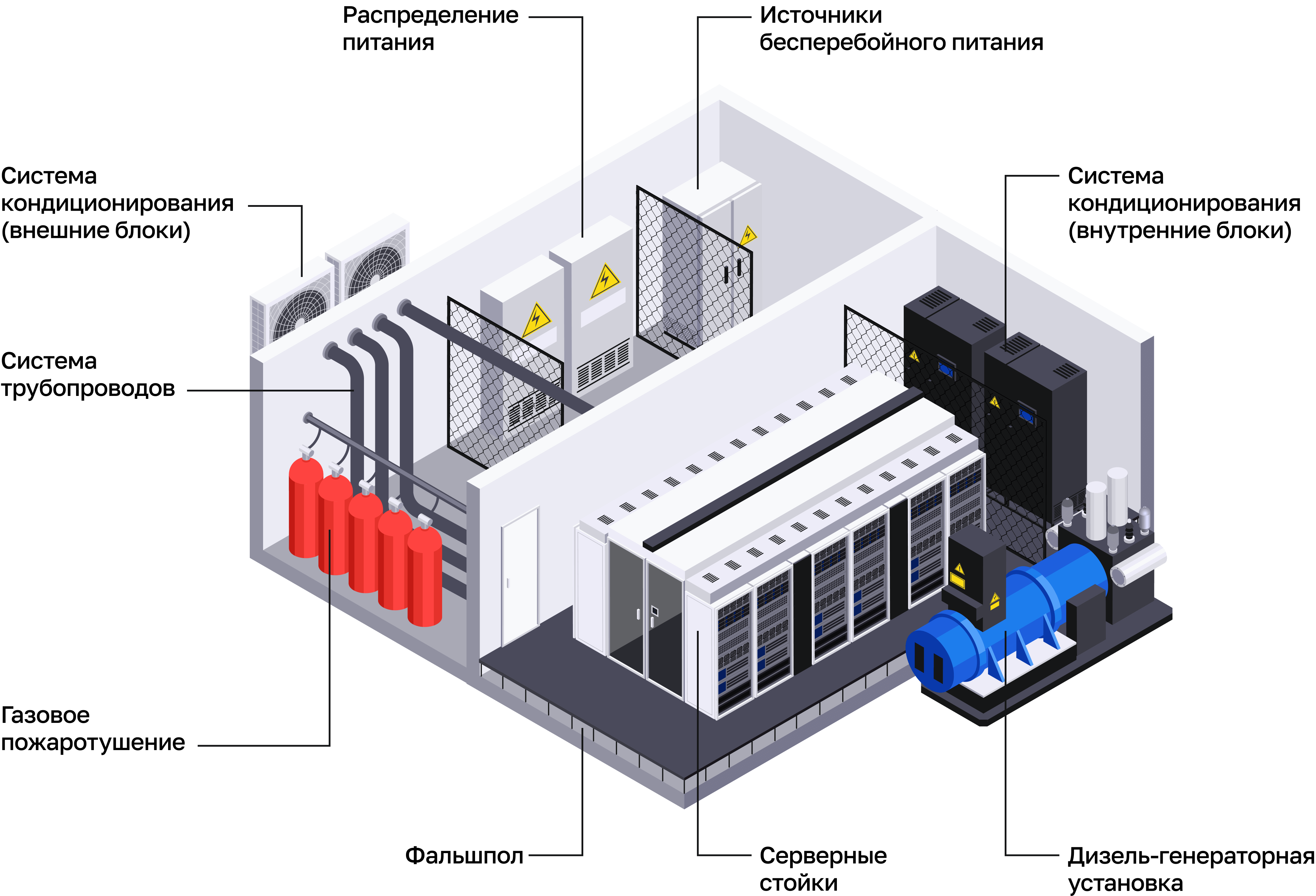
Data center engineering systems:
The minimum required performance of IT infrastructure and engineering systems is as follows:
Structured cabling systems (SCS) – a set of information cables and switching equipment. SCS combines a local computer network, telephone networks, fire safety systems, video surveillance, and ACS into a single system.
Access control and management systems (ACS) and video surveillance – a system for ensuring the security of the enterprise, which is used to control the movement of personnel and restrict access for third parties.
Main and emergency lighting is designed for general lighting of work and transit areas, for video surveillance, monitoring the movement of objects, and for fire safety. Emergency lighting includes autonomous and independent light sources and safety signs for evacuation.
Dispatching – monitoring, control, and interfacing of all IT and engineering systems of the enterprise into a single complex.